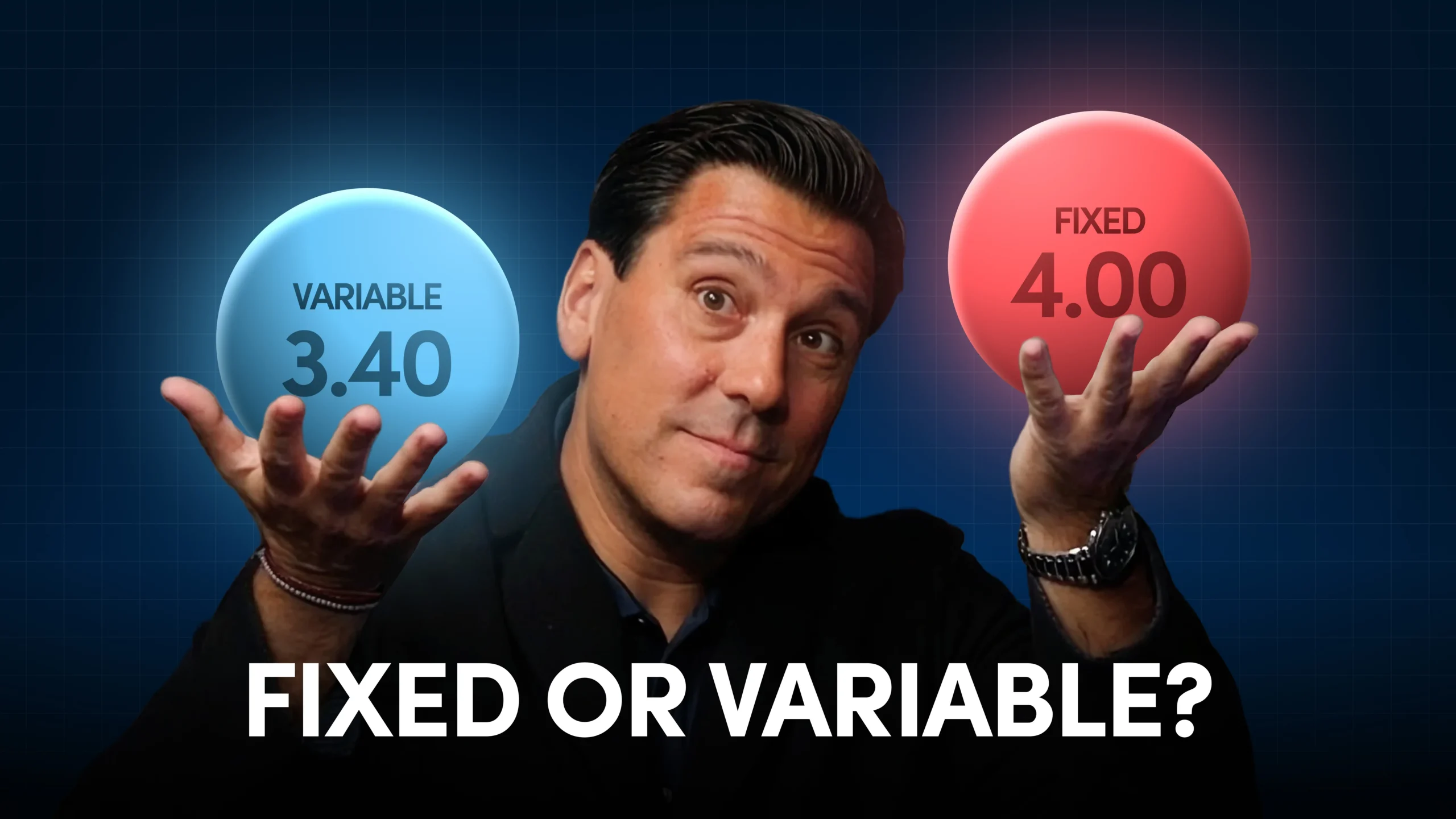
In today’s episode of Make Money Count, Marcus opens with a comparison between bumper stickers and STDs, which somehow leads into one of the more useful breakdowns of what’s actually been happening with mortgage rates over the past several months. The short version: the Bank of Canada has held steady meeting after meeting, but fixed rates have kept climbing anyway. Here’s why.
Held for 7 Meetings, But Not Standing Still
The Bank of Canada has held its overnight rate at 2.25% for seven consecutive meetings, with the prime rate sitting at 4.45%. On the surface, that sounds like a stable rate environment. But over that same stretch, bond yields have risen almost 50 basis points, roughly the equivalent of two rate hikes in effect, and that’s the number actually moving fixed mortgage rates. The overnight rate and fixed mortgage rates are not the same thing, and this is exactly why they can move in opposite directions.
Bond Yields Move First
Marcus and Justin return to a theme they’ve hit on before: bond yields react to inflation risk and geopolitical developments well before oil prices or headlines catch up. Fixed mortgage rates are priced off those bond yields, not the Bank of Canada’s overnight rate, which is why fixed rates have kept trending higher even while the headline rate has stayed put. As Marcus puts it, watching bond yields is a bit like getting early access to what the market already suspects is coming.
A $100 Bet on the Federal Reserve
The next major event on the radar is the Federal Reserve’s September decision, where markets are currently pricing in a 61% chance of a rate hike. Justin is confident enough that the Fed won’t hike that he put $100 on it. The stakes matter here because a Fed hike would likely push bond yields, and by extension fixed rates, even higher.
Looking ahead to the Bank of Canada’s own next meeting on October 28, the odds of a hike sit closer to 30%. Between now and then, several banks are publishing very different forecasts. Rabobank sees 2.25% as the terminal rate with no further hikes coming, while Scotiabank is calling for as much as 75 basis points of increases. As Marcus points out, picking which forecast to believe often comes down to which one confirms what you already expect to happen.
The Variable Rate Nest
Justin closes the episode with an extended analogy: the Bank of Canada as a bird sheltering variable rate holders like eggs in a nest, protected from the volatility currently hitting the fixed rate market. The catch is that shelter isn’t guaranteed to last. If inflation keeps building, the Bank may eventually have to raise the overnight rate too, exposing variable rate holders to the same pressure fixed rate holders are already feeling.
What This Means If You’re Renewing Soon
For anyone coming up for renewal in the near term, Justin and Marcus’s advice is to hold a rate now. A 120-day rate hold locks in today’s pricing, and even after accounting for a few months of interest during the hold period, the math still tends to favor locking in early over waiting and hoping fixed rates come back down.
What This Episode Is Really About
The headline number, the overnight rate, isn’t the whole story. Bond yields have already been telling a different one for months, and that’s the number actually shaping what borrowers are paying today. Understanding that gap is the difference between reacting to news after it happens and planning ahead of it.
Not sure what your mortgage options are? Talk to a Cannect expert now.
Watch the full episode of Make Money Count for the complete breakdown. Subscribe to the Cannect YouTube channel for weekly mortgage and real estate insights you will not find anywhere else.