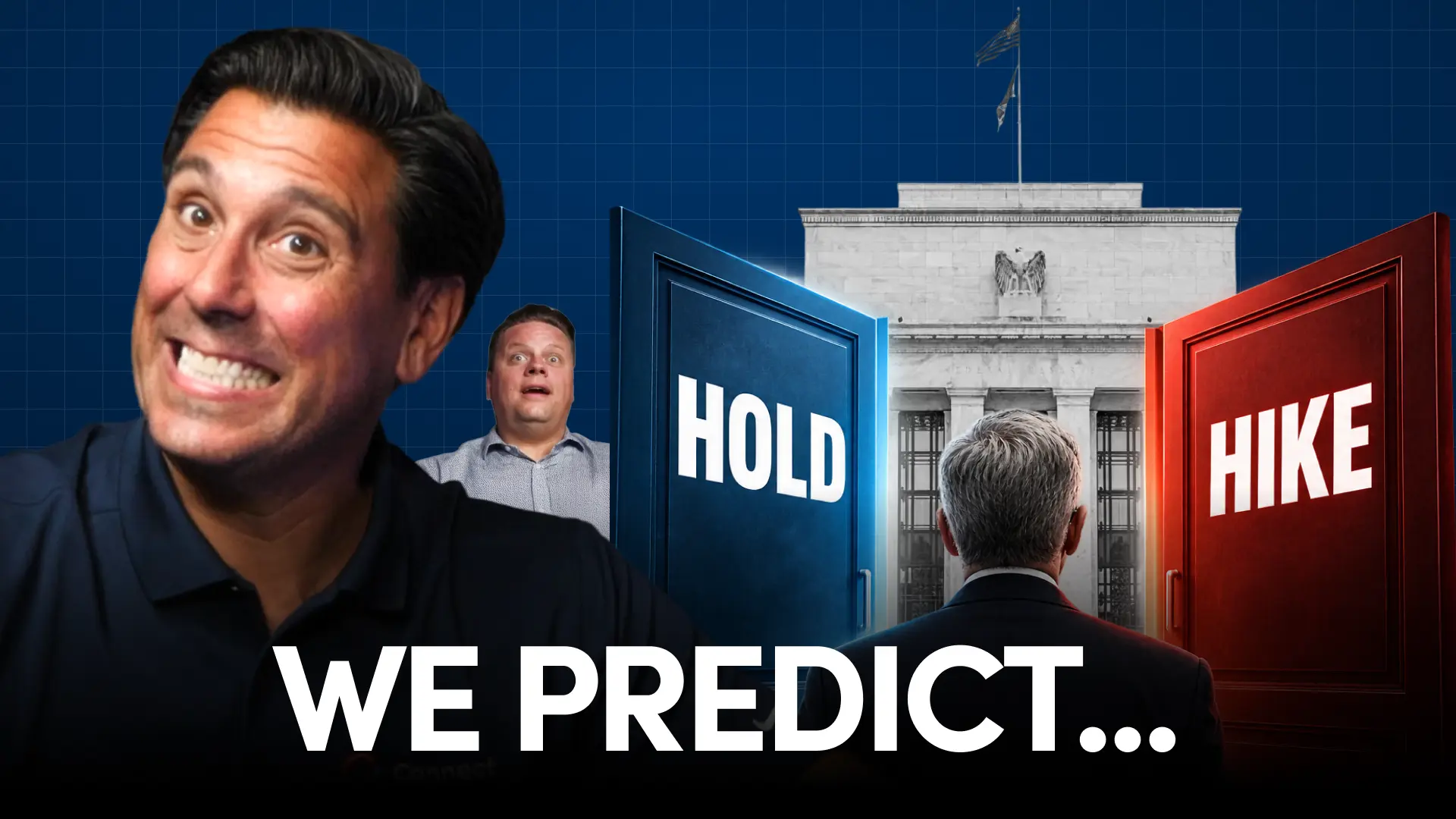
In today’s episode of Make Money Count, Marcus and Justin dig into a question that’s been building for weeks: with the 10-year US bond yield touching 5% and the Federal Reserve meeting tomorrow, can the Fed chair actually justify holding rates, or is a hike all but locked in?
A 90% Bet Against a Hold
The market is currently pricing in a 90% probability that the Federal Reserve hikes rates tomorrow. That’s not a coin flip, it’s close to a consensus. Adding to the pressure, the spread between short-term and long-term US bond yields has tightened to about 30 basis points, roughly a third of its historical average. That tightening spread doesn’t mean a recession is imminent, but it does suggest the market believes rate cuts are coming eventually, because consumers won’t be able to absorb higher rates for long.
The Threading-the-Needle Problem
If the Fed chair holds rates steady, there are only two ways the market can read it. Either he’s simply doing what the administration wants and delaying a hike for political reasons, or he’s seeing something in the data that justifies caution despite hot inflation and oil sitting above $100 a barrel. Convincing the market it’s the latter, especially with dissent already building among other Federal Reserve board members, may be a tough sell.
What a Hold Actually Signals
This is where it gets interesting. If the market decides a hold is political rather than data-driven, longer-term yields will likely rise even as short-term yields stay flat or drop. The market effectively takes matters into its own hands, tightening the economy itself through higher long-term borrowing costs.
But if the market believes the hold is genuinely data-driven, the opposite happens. Long-end yields, including the 10-year and 30-year, tend to fall, because the market reads it as a signal that growth is slowing and rate cuts are coming sooner than expected.
In short: watch the 10-year and 30-year yields after the announcement. If they rise, the market didn’t buy the explanation. If they fall, it did.
What This Means for Canadian Borrowers
A Federal Reserve hold has real implications north of the border too. If the Fed holds, it takes pressure off the Bank of Canada to follow suit, and variable rate mortgage holders come out ahead. A held US rate also tends to strengthen the Canadian dollar, which means less imported inflation from the United States, another tailwind for anyone watching Canadian rate decisions closely.
What This Episode Is Really About
Tomorrow’s decision isn’t just about whether the Fed hikes. It’s about whether the market believes the reasoning behind whatever the Fed chair decides. That distinction is what will actually move bond yields, and by extension, what borrowers on both sides of the border end up paying.
Not sure what your mortgage options are? Talk to a Cannect expert now.
Watch the full episode of Make Money Count for the complete breakdown. Subscribe to the Cannect YouTube channel for weekly mortgage and real estate insights you will not find anywhere else.