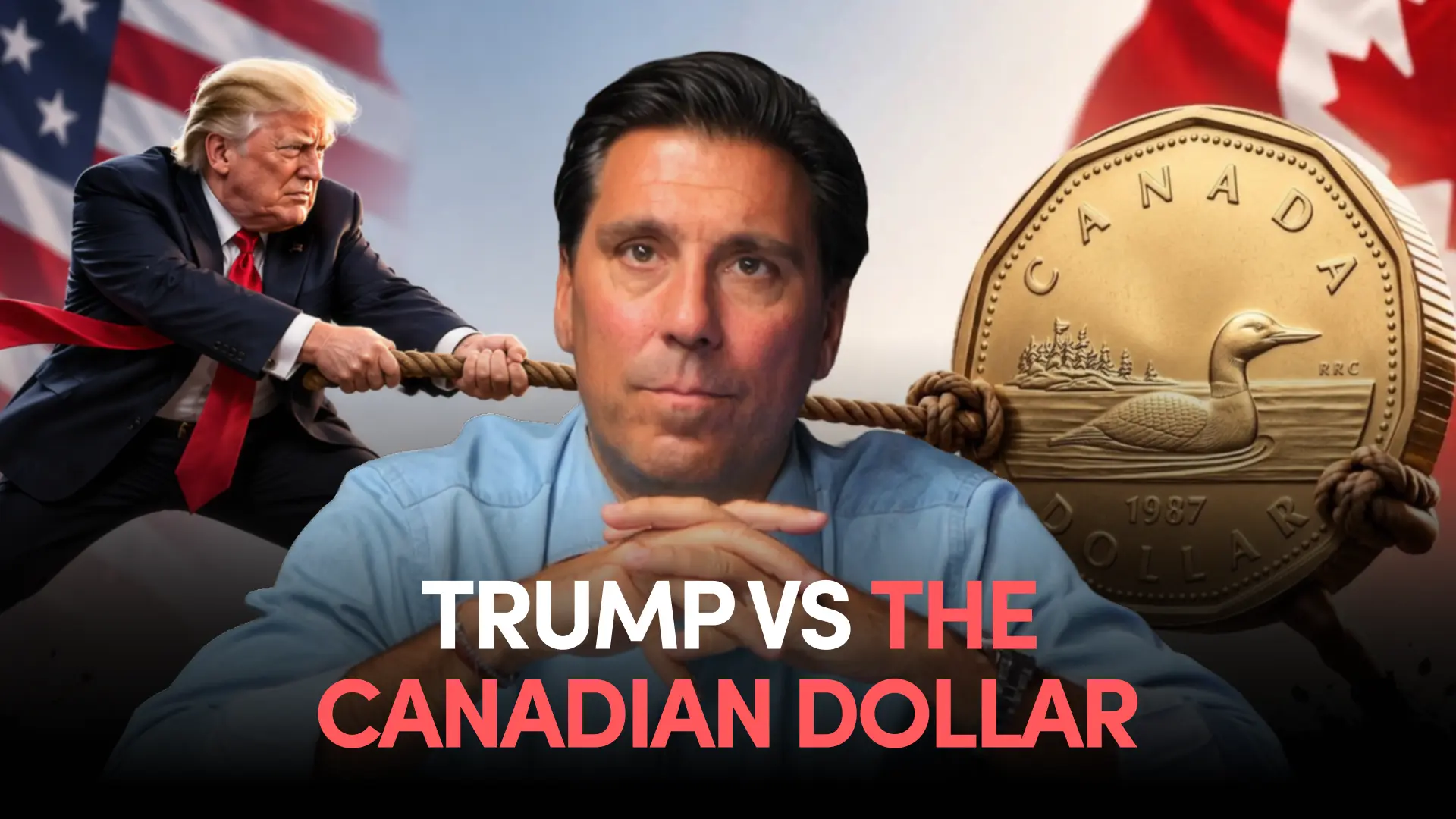
In today’s episode of Make Money Count, Marcus and Justin unpack something that sounds contradictory on the surface: Trump publicly says he wants a stronger Canadian dollar, but the actual economics point in the opposite direction. Here’s what’s really going on, and why it matters for your mortgage rate.
Why a Weaker Dollar Actually Works in Trump’s Favor
A country’s currency tends to strengthen when its economy is doing well and interest rates rise, since that draws in foreign investment and increases demand for that currency. Right now, the Canadian dollar is weak because investment isn’t flowing into Canada the way it once did. Historically, Canada and the US were at or near currency parity as recently as 13 to 14 years ago, a very different picture than today.
Here’s the twist: a weaker Canadian dollar actually benefits the US. It makes Canadian goods and services cheaper for Americans to buy, and it’s part of why foreign investment is starting to flow into Canada in the first place. So while Trump has publicly criticized the exchange rate, the depressed loonie is arguably working in his favor rather than against it.
The Only Lever the US Really Has
If Trump genuinely wanted a stronger Canadian dollar, the most direct way to get there from the US side would be lowering American interest rates. But cutting rates while inflation is still elevated is a risky move, one that could weaken the US dollar’s own safe haven status, a status that’s historically pulled in capital during periods of global instability the same way gold or, more recently, certain cryptocurrencies do.
Worsh’s Mixed Signals
Much of this episode also digs into Kevin Worsh, the Fed chair Trump installed, who was initially expected to lean dovish and push for lower rates. Instead, Worsh used his Jackson Hole appearance at the end of August to say inflation hasn’t improved and the Fed still has work to do, a comment that pushed the odds of a September 16 rate hike up to 60%. Stronger than expected US jobs data reinforced that shift further.
What makes this especially interesting is Worsh’s stated philosophy: he’s said he wants to move away from forward guidance entirely, letting economic data speak for itself rather than signaling intentions to the market the way past Fed chairs, most notably Alan Greenspan, famously did through what Greenspan called constructive ambiguity. The irony, as Marcus points out, is that the Fed’s own July meeting minutes acknowledged that its communications had already influenced Treasury yields, suggesting forward guidance is working whether Worsh wants to use it or not.
The 125 Point Gap
Right now there’s roughly a 125 basis point gap between the US and Canadian overnight rates, with the US sitting higher, and the market currently expects that gap to widen further. Where it actually lands will depend heavily on how Worsh navigates the pressure between pleasing Trump and responding to the data in front of him.
What It Costs to Break Early
The episode closes with a practical walkthrough using a real example: a $100,000 mortgage at a 3.35% variable rate, coming up for renewal in March. Switching early to a fixed rate at 4% means giving up 65 basis points of savings for the months between now and renewal, plus a break penalty based on three months’ interest. Added together, the total cost of breaking early comes out to just over $1,100. For rates to move enough to justify that cost, they’d need to rise by more than a full percentage point over the term, a useful benchmark for anyone weighing the same decision.
What This Episode Is Really About
Currency policy, Fed leadership, and your mortgage rate are more connected than they first appear. A weaker Canadian dollar isn’t just a side effect of a struggling economy, it’s part of a larger picture involving interest rate decisions on both sides of the border, and those decisions eventually work their way down to what borrowers actually pay.
Not sure what your mortgage options are? Talk to a Cannect expert now.
Watch the full episode of Make Money Count for the complete breakdown. Subscribe to the Cannect YouTube channel for weekly mortgage and real estate insights you will not find anywhere else.