







Mortgage Renewal in 2026: How to Optimize Your Strategy When Rates Are Higher

February 21, 2026

Renewing your mortgage today isn’t what it was five years ago.

If you locked in a 1.39%–1.49% fixed rate back in 2020, your renewal is likely coming with serious sticker shock. Interest rates are higher, payments are rising, and many Canadians are wondering how to protect their cash flow without making costly mistakes.

In this episode of Make Money Count, Marcus and Justin break down what mortgage renewals really look like in today’s market, and how homeowners can optimise their decisions instead of simply accepting what the bank offers.

The Mortgage Renewal Reality Check

Roughly 60% of Canadians are renewing their mortgages this year, and not everyone is coming from a five-year fixed term. Some borrowers will benefit from timing, but many won’t.

A Real-World Example

  • Original mortgage: $1,000,000
  • Rate (5 years ago): ~1.49%
  • Monthly payment: ~$3,444
  • Balance at renewal: ~$862,000
  • Amortisation: 30 years

At renewal, maintaining the remaining amortisation (now 25 years):

  • New payment: ~$4,533/month
  • Increase: ~+$1,000/month

That’s not a budgeting inconvenience, that’s a lifestyle change.

Can Re-Amortization Help?

One option many homeowners explore is re-amortizing back to 30 years.

  • New payment with re-amortization: $4,097/month
  • Monthly savings: ~$400–$500

While this doesn’t eliminate the increase, it can provide breathing room, especially for households adjusting to higher living costs across the board.

When Should You Start Preparing for Renewal?

The biggest mistake homeowners make is waiting.

Ideal Renewal Timeline

  • 12 months out: Strategic conversation about goals and risks
  • 4–6 months out: Start the application process
  • 120 days out: Lock in a rate hold

Some lenders offer 120-day rate holds, which means you can protect yourself against rising rates while staying flexible if rates fall.

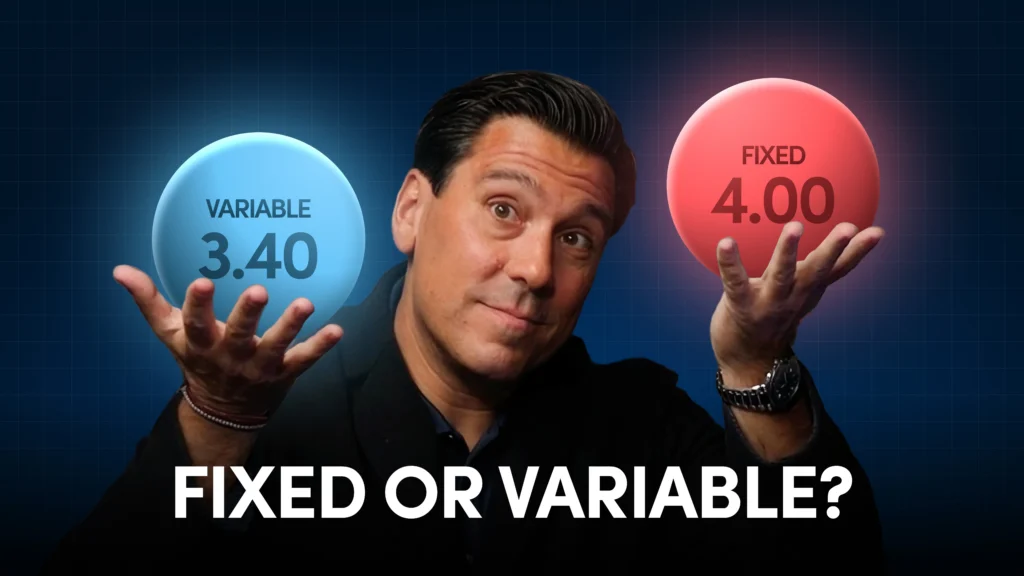
Fixed vs Variable: What Makes Sense Right Now?

Current Market Snapshot

  • Best 5-year fixed: ~3.74%
  • Best variable: ~3.35%
  • Difference: ~40 basis points

That gap matters, especially on large mortgages.

Why Variable Rates Are Back in the Conversation

There are several macroeconomic signals worth paying attention to:

  • The Canadian economy is showing signs of weakness
  • Inflation is easing toward target levels
  • Housing activity, especially condos, is struggling
  • Consumer confidence remains fragile

Even major institutions like CIBC have described the housing market as:

“Prices are still too high to buy, and not high enough to build.”

That kind of imbalance typically pressures employment, spending, and, eventually, interest rates.

If the Bank of Canada cuts rates by even 25 basis points, variable-rate borrowers stand to benefit immediately, while fixed-rate borrowers remain locked in.

The Hidden Cost of Fixed Rates: Penalties

Here’s the part most borrowers underestimate.

  • 75% of Canadians break their mortgage before the term ends
  • Fixed-rate penalties can easily reach $20,000–$30,000+
  • Variable-rate mortgages typically carry a much smaller penalty

Many homeowners don’t break because they want to, they break because life forces them to:

  • Selling the home
  • Job changes
  • Family transitions
  • Cash flow stress

And when that happens, fixed-rate penalties can turn a tough situation into a financial hit.

Risk Tolerance Matters More Than Headlines

Not every borrower should choose the same strategy.

Some homeowners prefer:

  • Predictability
  • Payment certainty
  • Peace of mind

Others are comfortable with:

  • Short-term fluctuations
  • Long-term savings
  • Flexibility

On a $1M mortgage, a 1% difference equals $10,000 per year. That’s real money, especially when compounded over time.

The key isn’t guessing rates. It’s choosing a structure that aligns with your risk tolerance and life plans.

Don’t Let Renewal Be a Default Decision

Mortgage renewal is not just a rate conversation; it’s a strategy decision.

The biggest mistake homeowners make is:

  • Accepting the lender’s first offer
  • Ignoring penalties and flexibility
  • Failing to plan early

The smartest borrowers:

  • Lock in early
  • Re-evaluate close to closing
  • Compare fixed vs variable with real math
  • Prioritize flexibility, not fear

If your mortgage is renewing this year, preparation, not prediction, is what protects you.

Subscribe on your Favorite Platform

More Episodes

Condo Market

If you’ve been feeling like the condo market has gone suspiciously quiet lately, you’re not

Mortgages

Global conflicts can feel far away, but their economic ripple effects often land much closer

Renewing your mortgage today isn’t what it was five years ago. If you locked in

After a short break, Make Money Count is back, and this episode couldn’t be more

The Bank of Canada

In this episode, we unpack what’s happening south of the border with Jerome Powell, the

A Warning from the Bond Market?

Make Money Count is back! After a short break, Marcus returns with a solo episode