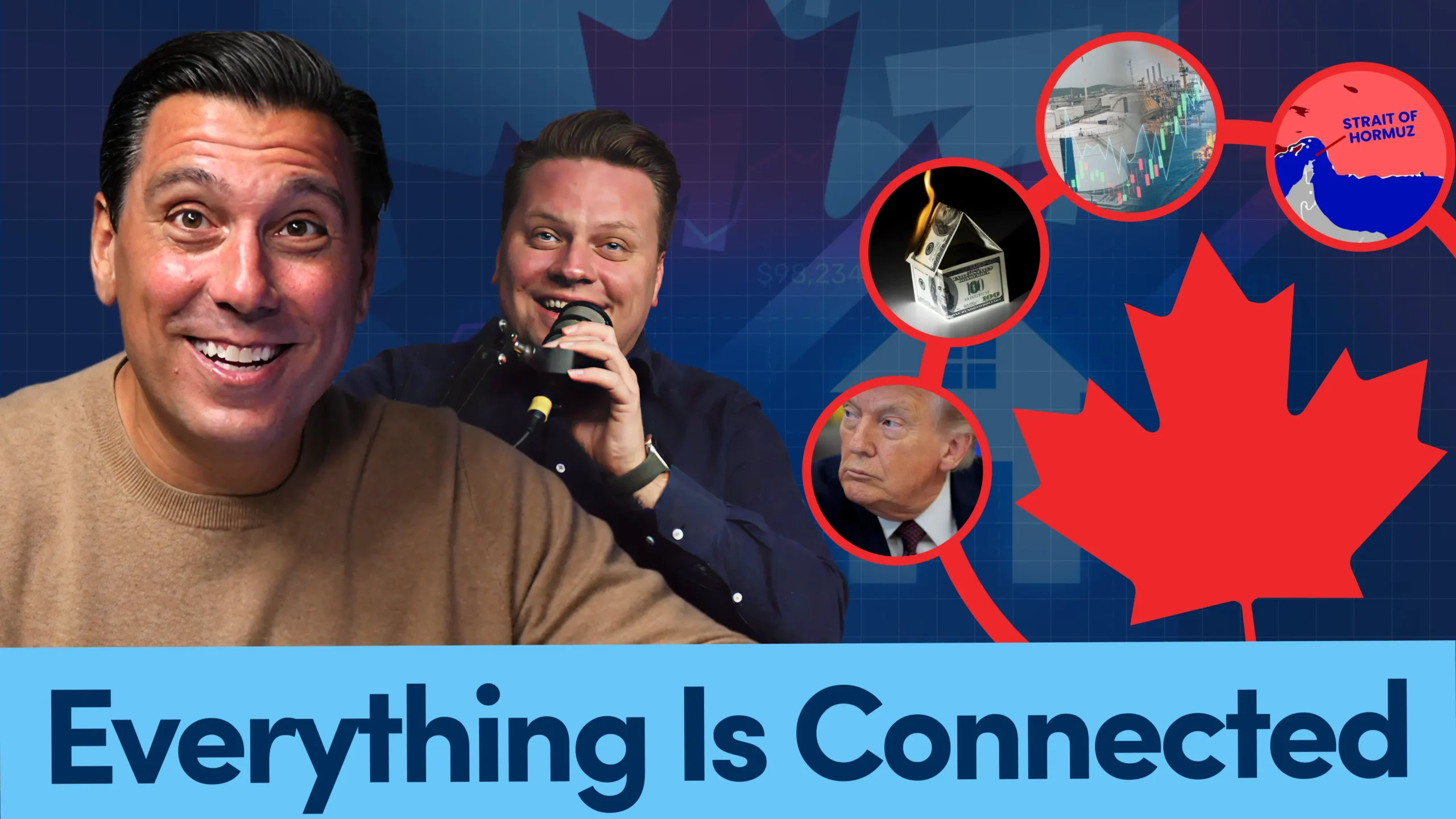
If you’ve been watching the news lately and feeling like something big is quietly building underneath the surface, you’re not wrong. You’re just not being told the full story.
This week on Make Money Count, Marcus and Justin sit down and unpack something most Canadians have never heard of, never thought to look for, and probably should have known about a long time ago. The Bank of Canada has been carefully tracking, scoring, and measuring every single word they’ve said to the public for the last 23 years. And right now, after all of that, they’re saying almost nothing at all.
That silence is not an accident. And it’s not good news.
The Bank of Canada Has Been Grading Its Own Homework
Here’s something that doesn’t get talked about enough. The Bank of Canada isn’t just making decisions about interest rates. They are obsessively managing how those decisions are communicated. Every press release, every public statement, every carefully chosen word is part of a deliberate strategy to signal to markets, banks, and mortgage holders what is coming next.
Marcus found something on the Bank of Canada’s own website that most people would scroll past without a second thought. Using AI, the Bank went back through 23 years of their own public announcements, from 2002 all the way to 2025, and scored every single sentence. Hawkish sentences, the ones signalling that rates are going up, got a plus one. Dovish sentences, the ones hinting that rates are coming down, got a minus one. Neutral sentences got a zero.
They then plotted all of that against what actually happened to interest rates over those 23 years.
The result is a chart that changes how you think about every Bank of Canada announcement you’ve ever half-listened to. Their words and their actions have been moving in near-perfect lockstep. Which means when they speak, it’s not just noise. It’s a signal. And right now that signal is sitting at exactly zero.
When The Most Powerful Financial Institution In Canada Goes Quiet
Think about what the Bank of Canada actually controls. When they speak, bond markets move. Mortgage rates shift. Billions of dollars change direction before most Canadians have even finished their morning coffee. These are not people who choose their words carelessly.
So what does it mean when they’re not really saying anything at all?
Right now, their messaging is neither hawkish nor dovish. It’s flat. Neutral. A perfect zero on the scale they’ve been quietly maintaining for over two decades. Marcus breaks down what that neutrality is actually communicating and why, in a moment like this one, silence from the Bank of Canada is almost louder than anything they could actually say out loud.
They want to cut rates. The Canadian economy is weak and getting weaker. But something is standing in the way, and that something has everything to do with what’s happening far beyond our borders.
The Chain Reaction Already In Motion
It’s easy to watch the news and feel like what’s happening in the world has nothing to do with your mortgage payment sitting on your kitchen counter. Marcus makes it very hard to keep telling yourself that.
Oil prices are climbing. When oil goes up, the cost of nearly everything goes up with it. Inflation starts to rise. And when inflation rises, the Bank of Canada faces a choice they absolutely do not want to be facing right now. Do they cut rates to support a struggling economy? Or do they hold, or even raise, to keep inflation from getting out of hand?
That tension is sitting directly on top of your mortgage renewal. And the timing couldn’t be worse. A massive wave of Canadian homeowners is coming up for renewal right now, many of them having locked in at rates that look nothing like what’s available today. The difference between the Bank of Canada moving dovish versus staying neutral isn’t just a number on a page. For a lot of Canadian families, it’s hundreds of dollars a month.
The Inflation Numbers Nobody Is Talking About Loudly Enough
Two inflation numbers are coming. Marcus isn’t feeling great about either of them, but it’s not actually the first one that worries him most.
The March number drops on April 20th. It will likely be uncomfortable but not catastrophic. It’s the April number, the one that comes out in May, that Marcus thinks could genuinely shake things up. The knock-on effects of rising oil prices take time to work their way through the economy. By the time that second number lands, the full weight of what’s been building could hit all at once.
For anyone with a mortgage renewal on the horizon, the difference between acting before that number drops and waiting to see what happens could be significant. Marcus lays out exactly why in the episode, and he doesn’t sugarcoat it.
Fixed or Variable? Marcus Doesn’t Dance Around It
After breaking down the global picture, the oil prices, the Bank of Canada’s frozen messaging, and the inflation numbers heading our way, Marcus and Justin get to the question that every Canadian homeowner actually wants answered.
What would you actually do right now?
Marcus answers it directly. No hedging, no disclaimer, heavy non-answer. Just a straight take on where he’d put his mortgage, given everything he’s looking at right now, and the reasoning behind it is worth hearing in full because it’s not the answer most people are expecting.
If Marcus Ran Canada
The episode starts as a lighthearted game. If Marcus were Prime Minister, what would he actually do? It doesn’t stay lighthearted for long.
Pipelines. Refineries. Nuclear energy. Small modular reactors. Natural resources that Canada is sitting on and largely not using. Marcus lays out a vision for this country that is equal parts practical and genuinely thought-provoking. The argument he makes, that Canada could lead the world in responsible resource extraction rather than outsourcing that extraction to countries with far worse environmental and labour records, is the kind of take that makes you stop and actually think.
Whether you agree with him or not, it’s hard to walk away from that part of the conversation without seeing things a little differently.
This Is The Conversation Canada Should Be Having
Most people find out about these things too late. They hear about inflation after it’s already hit. They hear about rate decisions after the bond market has already moved. They hear about what they should have done with their mortgage after the window has already closed.
If any of this has made you curious, the full episode is waiting for you on YouTube. Marcus and Justin walk through everything you need to know and a few things you didn’t even know you needed to hear.
The more you understand what’s coming, the better you can protect what you’ve built. This episode is exactly where to begin.And if you don’t want to miss conversations like this one, subscribe to the Cannect YouTube channel. Every week, Marcus and Justin bring you the kind of honest, straight-talking financial insight that most people only find out about too late. Don’t be that person.