







Is The Bank of Canada Just a Fancy Pawn Shop?

March 23, 2026

If you’ve been wondering why your variable-rate mortgage feels like it’s sitting on unstable ground lately, you’re not imagining it.

This week on the Make Money Count podcast, Marcus and Justin dig into a story from Canadian Mortgage Trends that most Canadians would scroll right past but probably shouldn’t. The topic sounds dry on the surface. But what they uncover is something every mortgage holder in the country should understand.

What Is the Repo Market and Why Should You Care

Most Canadians have never heard of the repo market. And honestly, that’s not surprising. It doesn’t come up at the dinner table. It doesn’t make the evening news. But it sits directly underneath the interest rate your bank puts in front of you  and understanding even the basics of how it works changes how you think about your mortgage rate from this point forward.

Marcus explains it simply. One party hands over a government bond, gets cash, and agrees to buy it back at a slightly higher price at a set point in the future. That price difference and the timeline attached to it set short-term interest rates in Canada. The Bank of Canada sits at the centre of all of this, dealing with major banks, large institutions, and increasingly, hedge funds making significant bets on where Canadian interest rates are headed.

That’s it. That’s the engine underneath your mortgage rate. Not complicated. Just rarely explained.

The Pawn Shop Analogy That Actually Makes It Make Sense

This is where the conversation really gets going. Marcus and Justin land on an analogy that is both unexpected and surprisingly accurate: the Bank of Canada is essentially running a pawn shop. But not just any pawn shop. One that only accepts a single item. A Rolex Platinum Daytona.

The watch has a market price that moves up and down. The pawnbroker, in this case, the Bank of Canada  sets the terms. How long do you have to come back and buy it back? At what price? Those two things together determine the cost of the transaction. That’s exactly how the repo market sets interest rates.

Now take it one step further. Imagine one customer walks through the door with not one Daytona but a hundred of them. Makes their deal. Takes the cash. And never comes back.

That’s counterparty risk. And that’s precisely what the Bank of Canada is concerned about as bigger and bigger players enter this market with larger and larger positions. How Marcus and Justin work through this analogy on the episode is honestly worth watching alone.

Why More Players in This Market Is a Problem

For a long time, the repo market was relatively contained. The big Canadian banks were the primary players, and the system operated in a fairly predictable way.

That has changed. Hedge funds have entered the Canadian bond market in a significant way, placing large leveraged bets on the direction of Canadian interest rates. Some betting rates go lower. Others are betting they go higher. The sheer scale of these positions introduces a level of risk that the existing structure was simply not built to handle.

When a large player gets it wrong, the fallout doesn’t stay on their balance sheet. It spreads through the system and touches every counterparty connected to that player, and your mortgage rate is not as far from that chain of events as you might think.

What the Bank of Canada Is Actually Doing About It

This is where it gets interesting.

Right now, the Bank of Canada manages separate individual deals with each counterparty. As the number and size of players have grown, so has the risk of that system. So the Bank of Canada is moving to a consolidated repo market, one centralized system with one neutral referee holding the master ledger for every transaction. If a large player defaults, the damage gets contained before it ripples outward.

Marcus flags something worth paying attention to here. Central banks almost always react after something breaks. The fact that the Bank of Canada is doing this proactively while the system is still functioning tells you something about what they are seeing right now. It is a rare move. And the full context of why they are making it is something Marcus unpacks properly in the episode.

One More Thing Worth Noting

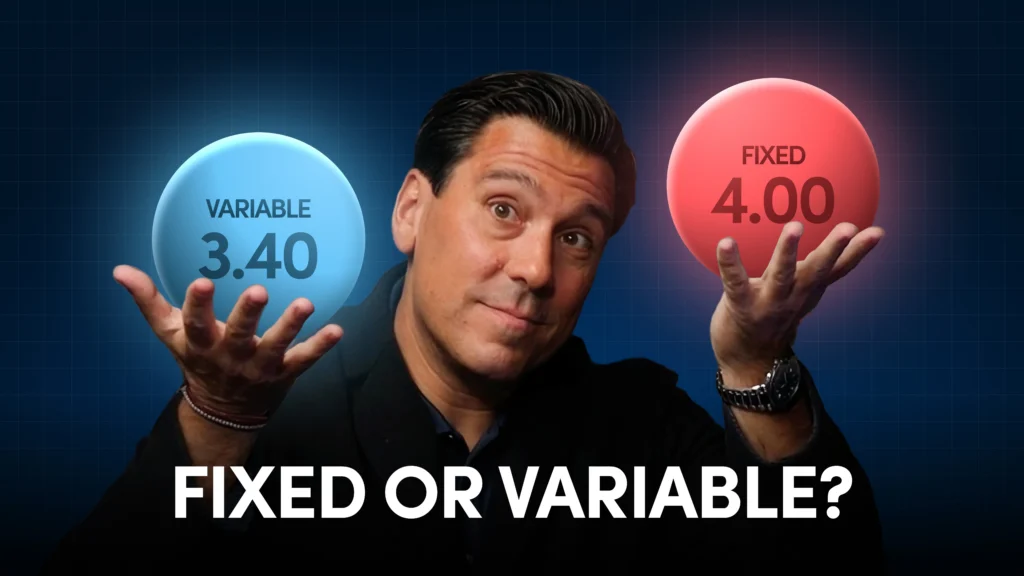
Marcus briefly references comments from the Bank of Canada’s deputy governor signalling that overnight rates could rise even during an economic downturn. It is a passing but important mention that raises a direct question for anyone currently deciding between a variable and fixed-rate mortgage.

Marcus answers that question directly in the episode. So does Justin. It is a short exchange but a straight one, and it is exactly the kind of honest, no-nonsense take that makes Make Money Count worth tuning into every week.

Still Think Your Mortgage Rate Just… Happens? Watch This.

There is a whole system running underneath your mortgage rate, and most people have no idea it exists. Watch this week’s Make Money Count on YouTube and hear it straight from Marcus and Justin. If you have a mortgage or are thinking about getting one, this is one episode you don’t want to miss. Subscribe to the Cannect YouTube channel and never be the last to know.

Subscribe on your Favorite Platform

More Episodes

Is The Bank of Canada Just a Fancy Pawn Shop?

If you’ve been wondering why your variable-rate mortgage feels like it’s sitting on unstable ground

Condo Market

If you’ve been feeling like the condo market has gone suspiciously quiet lately, you’re not

Mortgages

Global conflicts can feel far away, but their economic ripple effects often land much closer

Renewing your mortgage today isn’t what it was five years ago. If you locked in

After a short break, Make Money Count is back, and this episode couldn’t be more

The Bank of Canada

In this episode, we unpack what’s happening south of the border with Jerome Powell, the