After a short break, Make Money Count is back, and this episode couldn’t be more timely.
Employment numbers are out, CPI is around the corner, and bond yields are sending mixed signals. Everyone’s asking the same thing: what’s really happening with interest rates, and who’s getting it wrong?
The Illusion Behind Canada’s Latest Employment Numbers
Canada’s unemployment rate recently declined, but not for the reasons people might expect.
Rather than job growth, the improvement was driven largely by fewer people actively looking for work, especially youth aged 15–24. In Ontario, manufacturing job losses were offset by a drop in job seekers, pushing the labour participation rate to its lowest level since early 2021.
Despite this, Statistics Canada reports that very few people outside the workforce are classified as “discouraged.” That disconnect raises questions about whether the data fully reflects underlying economic stress.
Consumer Pressure Is Still Building
Beyond the headlines, the signals remain weak:
- Consumer confidence is low
- Spending is slowing
- Mortgage arrears are well above normal levels
- Housing activity remains under strain
The narrative says stability. The data underneath suggests caution.
Bond Yields Signal “Higher for Longer”
Canadian 5-year bond yields continue to trade in a tight 2.6%–2.9% range, indicating that markets do not expect meaningful rate cuts anytime soon.
Even with upcoming CPI data, traders appear unconvinced that the Bank of Canada will shift course without a clear economic deterioration.
CPI Outlook
January CPI data arrives on February 17. Inflation may ease slightly after December’s hotter print, but expectations remain muted.
Most likely outcome:
- Minor bond yield movement (10–15 bps)
- No change to the overnight rate
- Prime holding near 4.45% for much of the year
Tiff Macklem’s View
Bank of Canada Governor Tiff Macklem has been clear: rate cuts won’t solve Canada’s deeper challenges.
His position:
- Monetary policy can’t fix structural economic issues
- Lower rates risk reigniting inflation
- Businesses and government must drive productivity gains, especially in AI
In short, the Bank of Canada is choosing restraint—even if it means prolonged economic pressure.
The U.S. Takes a Very Different Approach
In contrast, Kevin Warsh, a leading candidate to head the U.S. Federal Reserve, argues that lower rates can accelerate productivity.
His thesis:
- Cheaper capital enables faster AI investment
- Higher productivity reduces inflation naturally
- Abundant goods and services ease price pressures over time
This mirrors the strategy used by Alan Greenspan in the 1990s, when low rates helped fuel the internet-driven productivity boom.
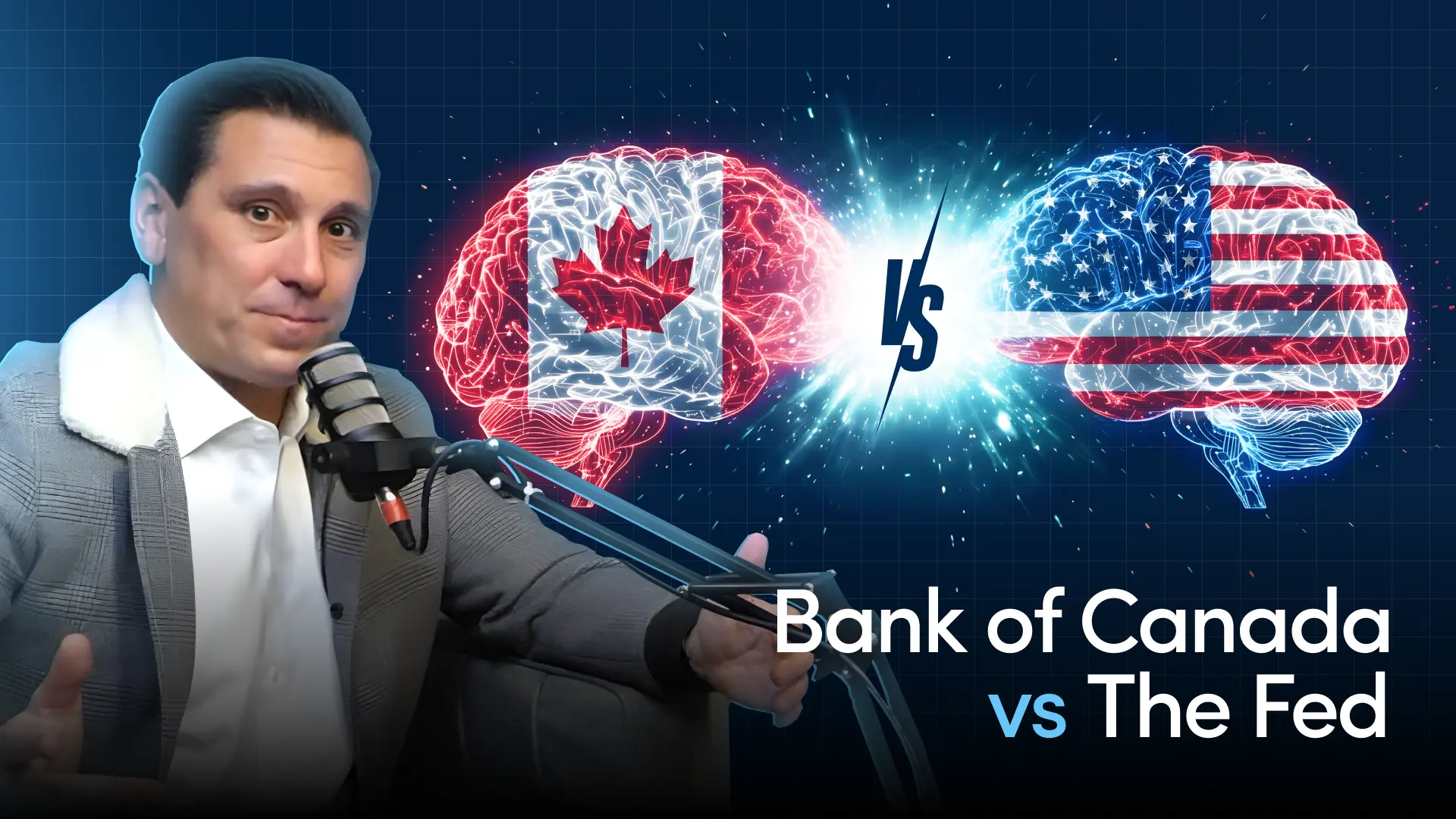
Two Central Banks. Two Strategies.
Canada:
- Hold rates
- Avoid inflation risk
- Force adaptation without monetary support
United States:
- Lower borrowing costs
- Accelerate AI adoption
- Compete aggressively on productivity
One path prioritizes discipline. The other prioritizes speed.
Why It Matters for Canada
A modest rate cut is unlikely to overheat housing, but it could ease pressure on households, improve cash flow, and loosen the economic chokehold caused by high borrowing costs.
Instead, Canada is betting that businesses will adapt without that support.
History suggests major economic pivots usually follow capital investment, and capital responds to interest rates.
Final Thought
Canada is asking its economy to transform under tight conditions. The U.S. is lowering the cost of capital to fuel transformation. As this cycle unfolds, the real question isn’t just about rates, it’s about whether restraint or momentum proves to be the winning strategy. Because hope alone has never powered an economic comeback.